In any basketball action, there is an important relationship between the players directly involved and those outside of it. A spread ball screen offers a good example. Two players are directly involved in the action (the ball handler and the screener), while three players operate away from it.
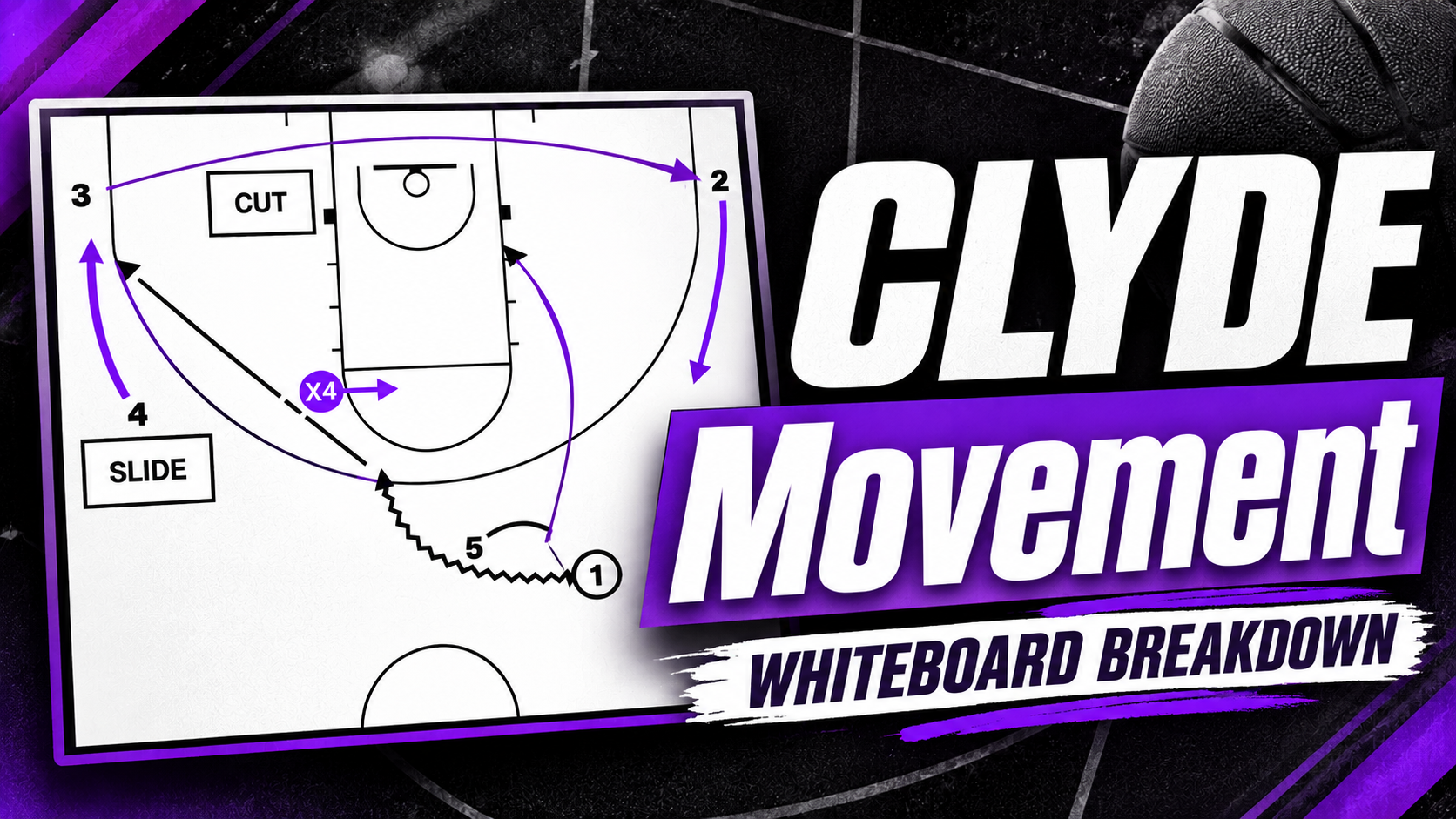
It’s worth considering how the movement (or lack of movement) of those three players can enhance the effectiveness of the ball screen. One such example is a dribble penetration reaction we call “Clyde” movement.
CLYDE Movement Explained
In a typical spread ball screen alignment, there is a single side and a double side. In the diagram below, Players 3 and 4 occupy the double side.
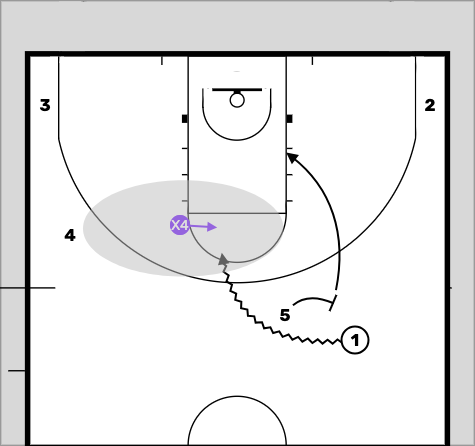
When Player 1 receives the screen, the driving path is toward the double side. The problem is that Player 4’s defender (X4), commonly referred to as the “nail” defender, can plug the driving lane and prevent Player 1 from getting into the paint. Clyde movement addresses this problem.
Note: The term “Clyde” combines the words “cut” and “slide.”
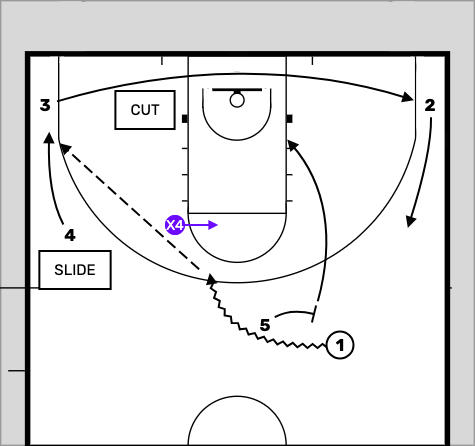
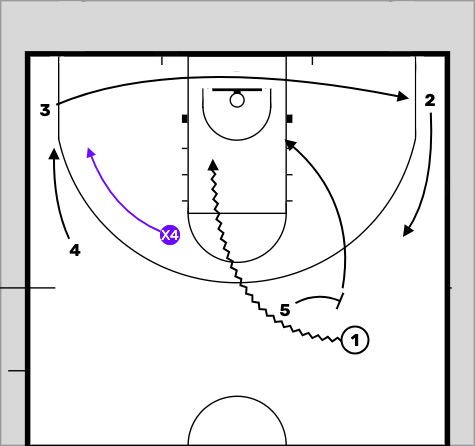
As the ball screen action unfolds, Player 3 cuts along the baseline and Player 4 slides to the corner and Player 2 lifts behind the screen. The offense is essentially switching the single and double sides of the floor while Players 1 and 5 execute the ball screen.
This movement puts X4 in a dilemma: help on the drive and surrender an open corner shot to Player 4 or stay attached to Player 4 and create a wider driving gap for Player 1.
Free Trial: Get access to FastBreak Playbook
Clyde movement offers several potential benefits:
- Opens the driving lane by drawing the nail defender (X4 in our example) away from the gap.
- Generates an open three-point attempt when X4 stays in the gap to help on the drive.
- Creates confusion among defenders over who is responsible for helping on the roller.
Conclusion
When teaching spread ball screen offense, coaches should devote time to what happens away from the ball. With Clyde movement, timing is particularly important. The baseline cut and the slide to the corner should coincide with the ball handler coming off the screen so the help defenders are occupied as the driver attacks the gap.
During practice, have the ball handler read the nail defender and make decisions based on how that defender responds to the movement. The players away from the ball should understand how their movements influence those reads.