Rebounding wins games, but most teams treat it as an afterthought. When you coach it with intent, every possession swings in your favor. Here is how to build rebounding into your program so it shows up when the game is on the line.
1. Teach Rebounding as a Mindset First
Your best rebounders expect every shot to miss. That mindset starts in practice, not the pregame speech. For example, reward players who chase long rebounds and call out weak box-outs immediately. When you tie effort to accountability, rebounding becomes part of your team identity. Additionally, track rebounds in scrimmages and post the numbers so players see who competes and who coasts. Programs built on a shared program vocabulary find it easier to reinforce these habits across every level.
2. Drill the Box-Out Until It Becomes Instinct
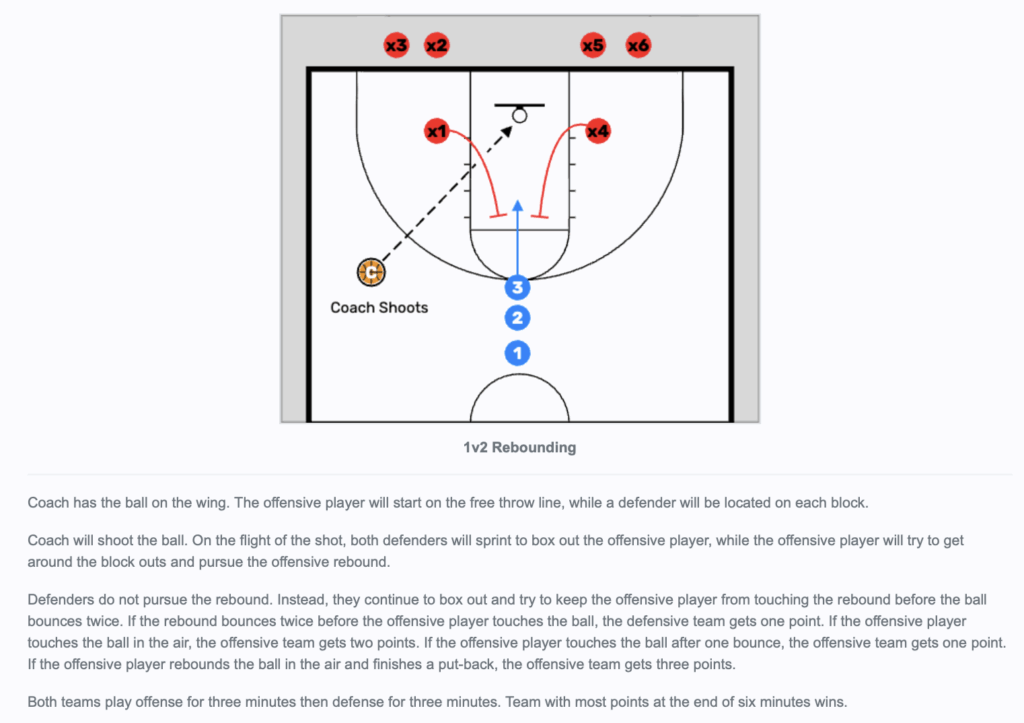
Good box-outs look simple, but they break down once fatigue sets in. Run the 1v2 Rebounding drill below every week so players learn proper contact, leverage, and pursuit. Start slow and build up speed once the footwork looks clean. As a result, your bigs stop reaching and start owning the paint when it matters. Use step-by-step visual breakdowns so every player sees the correct angles before they try it live.
3. Scout Your Opponent’s Rebounding Tendencies
Every team has rebounding habits you can exploit. Some bigs crash hard but leave the weak side wide open. Others send guards back early, which means you can push the break after a miss. Build these tendencies into your scouting reports using shared play tracking so your whole staff stays on the same page. Once your players know what the other team does, they start winning 50/50 balls before the shot even goes up.
4. Tie Rebounding to Your Play Calls
Rebounding assignments should live inside your offensive sets, not separate from them. For example, when you run a wing ball screen, the weak-side shooter crashes long while the screener dives. That means fewer breakdowns and more second-chance points. Coaches can find and build plays on FastBreak PlayBook and layer rebounding responsibilities directly into each action. But do not stop there. Teach new plays without losing practice time so rebounding rules become second nature.
Conclusion
Great rebounding teams are built, not born. Coach the mindset, drill the fundamentals, scout the matchups, and bake assignments into every set you call. Your players will feel the difference, and so will the scoreboard. Explore more coaching tools at FastBreak PlayBook and give your program the edge it needs on the glass.