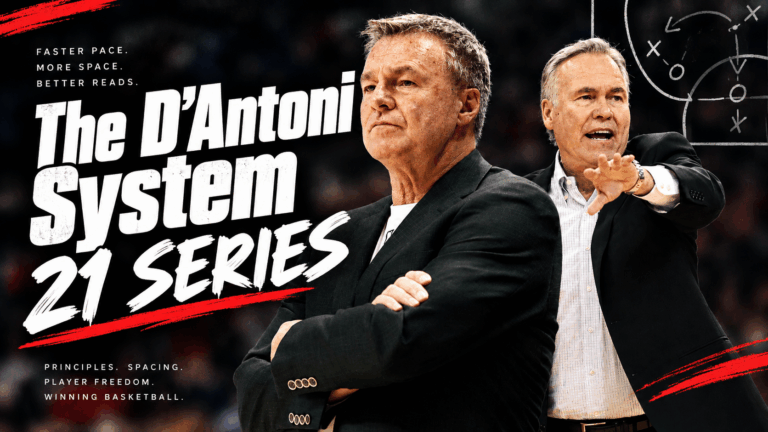
Transition offense wins games because defenses cannot set, match up, or communicate before the ball crosses half court. When your team sprints lanes and flows directly into an offensive set, you create easy looks before help arrives. Coaches who blend pace with structure give their players a real edge every trip down the court.
1. Sprint the Floor With Numbered Lanes
Every fast break starts with spacing, and spacing starts with lane discipline. Your 1 pushes the middle, your 2 and 3 sprint wide to the corners, and your bigs rim run hard. Because players know exactly where to go, they stop thinking and start running. For example, when your 5 beats his man down the floor, the defense collapses and the kick out becomes wide open. Drill this every practice until it feels automatic. Teams that rely on tools like the FastBreak PlayBook build that muscle memory faster because players see the spacing, not just hear about it.
2. Flow From Break Into an Early Action
Once the initial break gets stopped, most teams slow down, reset, and waste eight seconds. Instead, flow right into an early offense action while the defense still scrambles. Drag screens, early ball screens, and quick dribble handoffs all punish a defense that has not fully matched up. A Drag Pistol hits that window perfectly because the trail big sets a drag screen while your wing cuts hard off a down screen. That means two actions happen before the defense even finds its man.

3. Teach the Triggers, Not Just the Plays
Players run early offense better when they read triggers instead of waiting for a call. For example, a missed shot triggers rim run and wide sprint, but a made basket triggers a quick inbound and drag action. Coaches who break this down visually help kids lock in fast, and that is exactly where Smart Frames for basketball plays pay off. Step-by-step visual breakdowns turn confusion into confidence. Coaches who want to teach new plays without losing practice time lean on these frames during walkthroughs, so players see their spots clearly and play with purpose.
4. Build a Shared Language for Quick Calls
Transition play falls apart when five guys hear five different things. A shared vocabulary fixes that fast. When your 1 yells “Flare,” every player knows the action, the spacing, and the read. Programs that invest in basketball terminology playbooks run cleaner breaks because the language carries across every level. Additionally, scouting becomes sharper when your staff uses consistent terms, and tools like shared play tracking for scouting keep everyone aligned on opponent tendencies.

Final Thoughts for Coaches
Quick buckets come from habits, not hero plays. When your team sprints with purpose, flows into early actions, reads triggers, and speaks one language, the offense feels unstoppable. Build these four pillars into practice, and your transition game turns scrambled possessions into easy points. Additionally, learning how to find and make plays on FastBreak Playbook speeds up your install. Coach it hard and trust the process.